Table of contents
Fleet electrification is no longer a pilot topic, it is a board-level risk, and the past two years have turned that reality into hard numbers. In the United States, electric vehicle sales reached roughly 1.2 million in 2023, about 7.6% of the light-duty market, while commercial fleets moved more cautiously, constrained by grid capacity, depot construction timelines and total cost of ownership uncertainty. Across recent projects in Europe and North America, the same pattern keeps surfacing: vehicles are the easy part, and infrastructure, operations and power are where schedules slip and budgets inflate.
Depots, not vehicles, set the clock
“Why is the delivery van ready before the depot?” That question has become a recurring refrain in electrification programs, because vehicle procurement often follows a predictable cadence, while depot readiness depends on civil works, permits, utility coordination and equipment lead times that behave like a different industry entirely. In practice, fleets discover that the critical path is rarely the factory build slot, it is the sequence of trenching, switchgear installation, transformer upgrades and commissioning, all of which can be derailed by a single missing approval or an underestimated construction constraint. Even in relatively mature markets, utility interconnection can stretch into many months, and on some recent North American projects, fleets report timelines approaching a year when medium-voltage upgrades are required, particularly where substations are saturated or where right-of-way work triggers extra reviews.
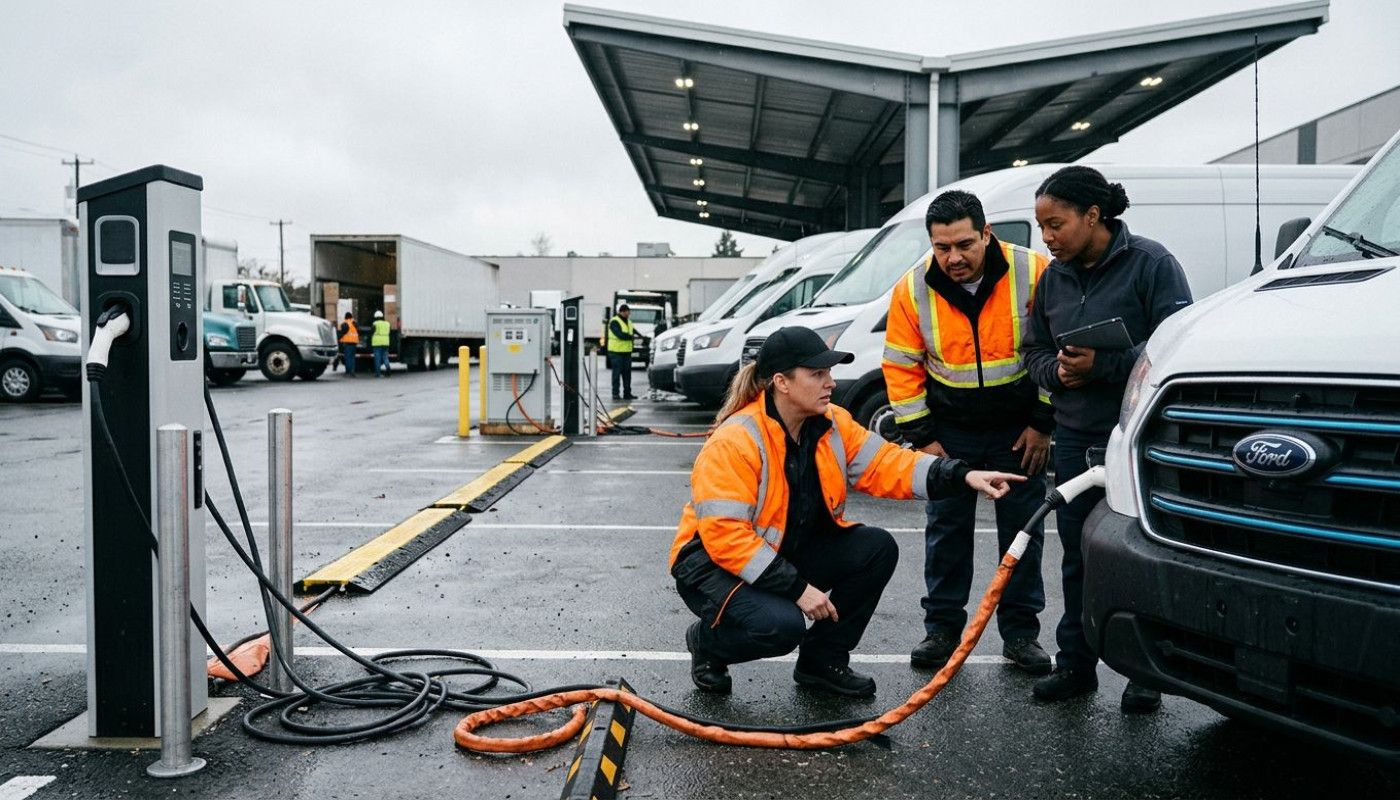
The lesson from the most successful deployments is blunt: treat the depot as an energy project, not a parking lot with chargers. That shift forces earlier site surveys, load studies and design work, and it brings facilities teams, safety officers, insurers and utilities into the room before vehicle orders are finalized. It also reframes the budgeting conversation, because “charger cost” is only one line item, and it is often not the largest one once electrical panels, concrete, canopy work, lighting, security and fire code compliance are included. In several European cases, fleets have reduced schedule risk by standardizing modular infrastructure blocks and planning for phased energization, so part of the yard can go live while the rest of the site is still under construction. The most resilient designs also assume expansion from day one, leaving space in switchboards, spare conduits and transformer capacity headroom, because retrofitting a live depot is where costs escalate fastest.
Power constraints rewrite operating assumptions
“Do you have the megawatts?” It sounds like a utility question, yet it quickly becomes an operations question, because available power dictates when vehicles can charge, how many can charge simultaneously and what compromises the fleet must accept in route planning. A common miscalculation in early projects is to size infrastructure off the vehicle nameplate charge rate, as if every charger will run flat-out at the same time, or conversely, to assume perfect off-peak charging without accounting for late returns, unscheduled swaps and seasonal peaks. The reality sits in between, and it is shaped by local tariffs, demand charges and grid constraints that can punish short bursts of high power even when total energy use looks reasonable.
Data from the International Energy Agency shows why this matters at scale: global EV sales surpassed 17 million in 2024, and public charging capacity continues to expand, but depot and workplace charging remain the backbone for commercial electrification, where utilization patterns are more predictable and the energy volumes are higher. For fleets, that means peak management becomes a first-class design target, and smart charging is not a “nice to have” add-on, it is a financial control. Recent projects that stayed on budget typically combined managed charging with operational discipline: firm return windows, staggered departures and clear rules for opportunity charging. Where the grid is tight, some operators have layered behind-the-meter storage or on-site generation, not as a green statement, but as a way to avoid transformer upgrades and to cap peak demand. In Europe, regulatory pressure on CO2 and local air quality is accelerating these decisions, while in North America, incentive structures and utility programs can make or break the business case depending on whether rebates cover make-ready electrical work or only the chargers themselves.
Interoperability headaches surface on day two
“Everything worked during commissioning.” That is often true, and it is also why day-two problems are so frustrating, because they appear only once real drivers, real dispatchers and real weather enter the system. Fleets running multi-brand vehicles and mixed charger environments routinely encounter software fragmentation, inconsistent telemetry, authentication failures and uneven reliability between hardware generations. Even when vehicles and chargers comply with the same standards, implementations vary, and a small mismatch in communication or firmware can trigger sessions that fail silently, leaving a truck undercharged for the morning shift. In high-utilization depots, a few percentage points of charger downtime can translate into missed routes, spare vehicle requirements and a creeping loss of confidence from operations teams.
This is where infrastructure architecture choices matter, and why projects increasingly emphasize integration layers that can normalize data and orchestrate charging across assets. Fleets want one pane of glass for state of charge, charger status, energy cost and exceptions, yet too many deployments still rely on vendor-specific portals that do not talk to each other. The best-performing programs have treated software integration as early scope, not post-go-live cleanup, and they have pushed for clear service-level agreements, remote monitoring and defined incident response procedures. Some have also leaned into prefabricated and standardized energy distribution approaches that simplify deployment, shorten installation time and make maintenance more repeatable across sites. In that context, partners such as aventech Group are part of a broader trend toward modular, scalable electrical “building blocks” that aim to reduce on-site complexity, a crucial advantage when skilled labor is scarce and when downtime carries immediate operational penalties.
Total cost of ownership surprises come from the edges
“The spreadsheet said it would pay back.” Many electrification business cases look solid until the edge costs arrive, and those costs tend to cluster around training, downtime, spares and the hidden price of change management. Electricity can be cheaper per mile than diesel, and maintenance profiles can improve, yet fleets still face learning curves in driver behavior, regenerative braking optimization, tire wear patterns and cold-weather range management. Add the operational cost of charging discipline, the need for contingency vehicles and the staffing required to monitor infrastructure, and the real-world total cost of ownership can diverge from early models that assumed perfect utilization and near-zero charging failures.
There are also financing and accounting nuances that can swing outcomes. Vehicle incentives may be available, but infrastructure incentives can be fragmented, capped or tied to specific timelines, and delays in permitting can cause fleets to miss application windows. Insurance and safety requirements, including fire detection, emergency shutoffs, signage and staff training, can trigger redesigns late in the project if they are not captured in initial scope. Meanwhile, residual values for electric commercial vehicles remain a moving target, shaped by battery health reporting, warranty transferability and secondary-market demand, and that uncertainty affects leasing rates and risk premiums. The most disciplined projects have responded by building conservative buffers, validating assumptions with depot-level data, running short operational pilots that stress the system in winter and summer, and negotiating performance guarantees where possible. In other words, they have treated electrification as a transformation program, not a procurement exercise, and that mindset is increasingly the difference between a showcase depot and a scalable rollout.
Planning your next rollout, without guesswork
Set a realistic timeline, and start with the depot design and utility discussions before final vehicle quantities are locked. Build a budget that includes make-ready works, software integration, training and contingency capacity, then map available local and national incentives early so you can meet deadlines. Reserve installation slots in advance, and plan phased commissioning to keep operations running.
On the same subject
